Industry Background: Silicone Programs Are Scaling Faster Than Many Sourcing Plans
The LSR market is expanding
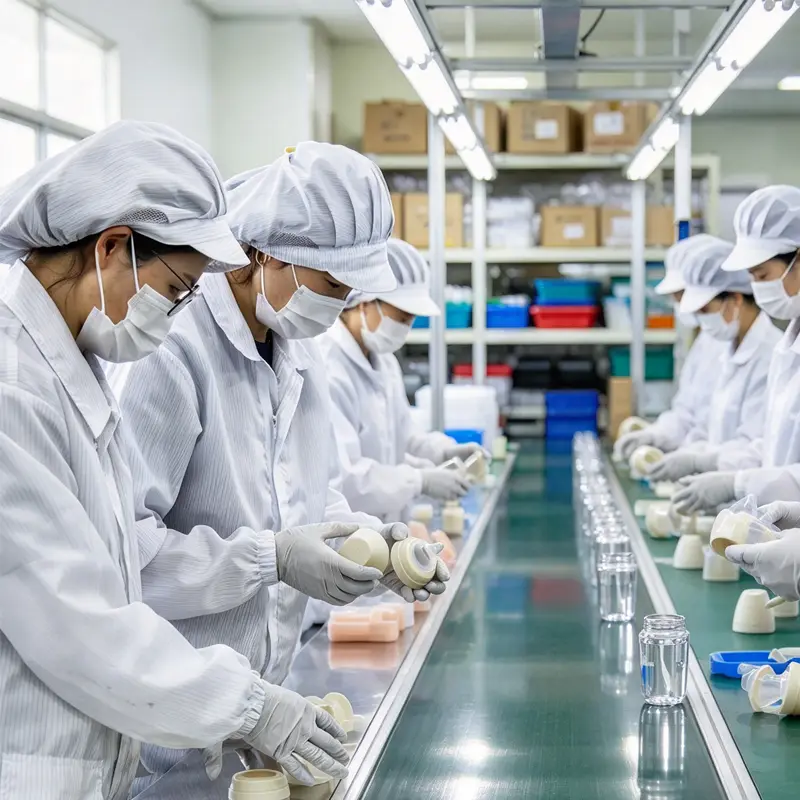
Grand View Research estimates the global liquid silicone rubber (LSR) market at USD 2.8 billion in 2023. It projects USD 3.6 billion in 2026 and about USD 5.0 billion by 2030, an 8.5% CAGR. More programs are therefore moving from first samples to volume. Production lines, tooling and approved materials are expected to carry the load.
The 2026 raw material backdrop
Scaling now happens against changing input costs. WACKER announced price increases of up to 25% on addition-curing silicone rubber grades, effective February 1, 2026. It cited a sharp rise in platinum prices, because platinum is the catalyst used to cure these silicones. A price set at pilot volume may not survive a full production year, so scaling is a material-cost question as well as a capacity question.
Why It Matters: What Changes Between 500 Pieces and 500,000
Small batch and mass production are different problems
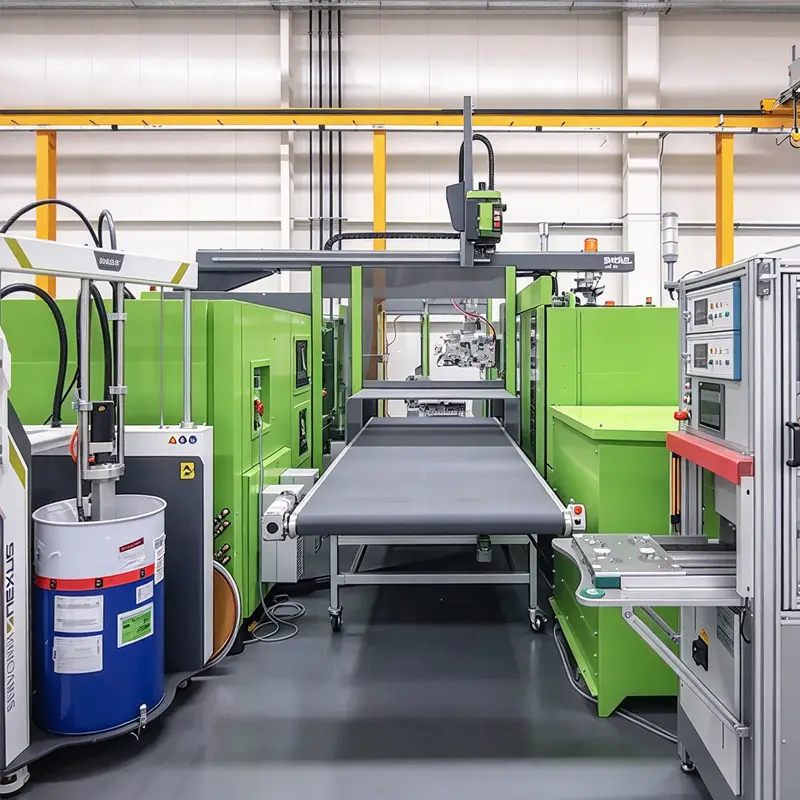
A small batch tests whether the design works. Mass production tests whether it can be repeated: the same dimensions, the same durometer, the same surface and the same cost, shipment after shipment.
Where scaling programs usually lose money
Cost leaks tend to sit in three places: a prototype tool that cannot survive production volume, a process chosen for sampling rather than for the run, and a quality plan that was never written down. Each of these is easier to fix before tooling is released than after.
Supply continuity is part of the scale-up
Volume programs depend on steady raw material supply and a supplier that can add capacity without re-qualifying the part. Buyers should ask about both before committing.
Market Observation: What the Data Says About Volume Silicone
LSR injection molding is the dominant volume route
Mordor Intelligence reports that liquid injection molding accounted for 69.19% of the LSR market in 2024. By application, seals, gaskets and O-rings held 45.18%. Buyers planning volume silicone parts are therefore working in a mature process route with established tooling practices.
Platinum-cure materials carry commodity exposure
The WACKER notice shows that platinum-cured silicone cost can move quickly with a precious metal. That matters most for long contracts, so buyers should agree how raw material changes will be handled before ramp-up.
Medical and consumer demand raise the bar for consistency
Mordor Intelligence also links LSR growth to biocompatible medical parts and consumer products such as baby care items. Both segments tend to require documented, repeatable production, so quality records should be planned from the first volume order.
Engineering Considerations: Choosing the Right Process and Tool for Each Stage
Prototype and bridge tooling
Neosilicone’s own tooling guidance notes that low-volume runs may be better served by a prototype tool until volumes justify a larger investment. Its LSR page adds that low-cost aluminum molds can be economical in production. Bridge tooling is a way to validate the design and the market before committing to a full production tool.
Production tooling and cavity planning
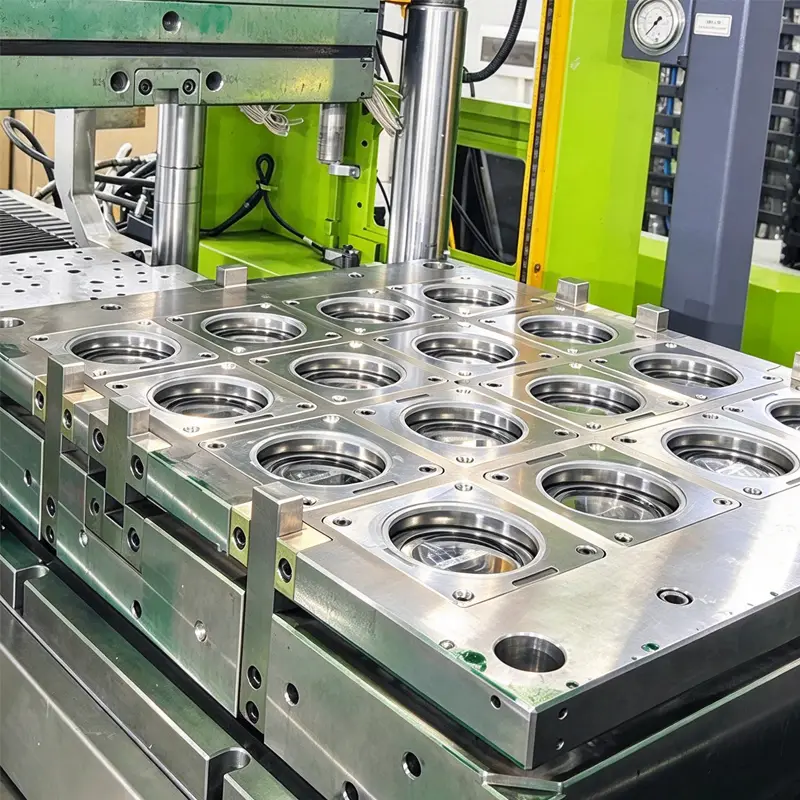
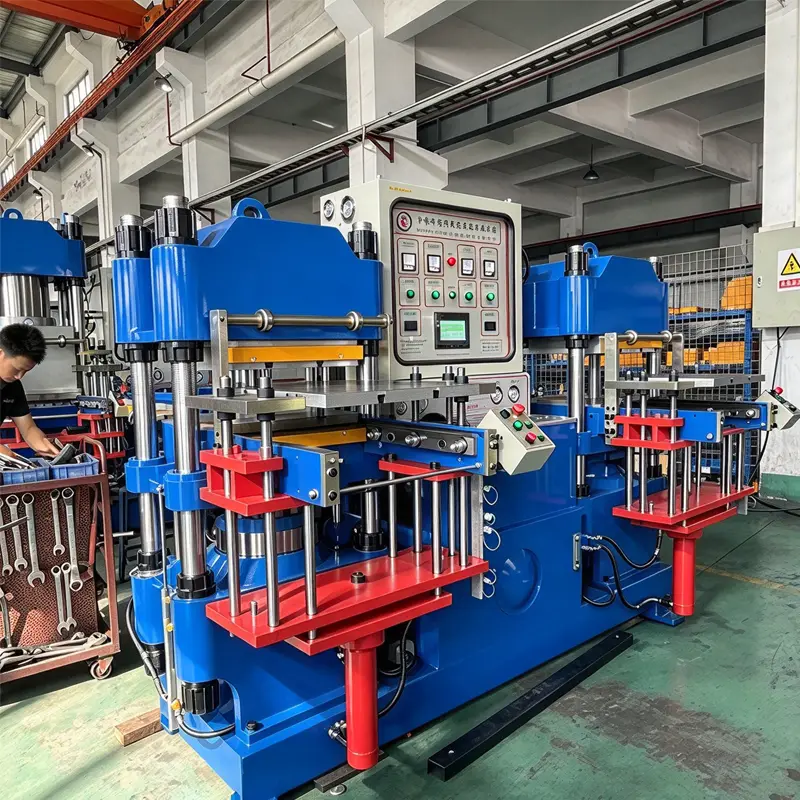
For projects heading directly into high volume, durable production tooling is typically the more cost-effective choice over the long run. Cavity count, runner type and demolding method set cycle time and cost per part. Silicone molds can use hot or cold runner systems, valve-gated nozzles and automated demolding. A cold runner reduces material waste because the silicone in the runner is not cured and discarded with each shot. Learn more about tooling and mold design.
Compression molding versus LSR injection molding
Silicone compression molding is a simpler process and works well for lower volumes and parts that combine silicone with plastic, metal or fabric. LSR injection molding suits high-volume, precision parts and automation. The right choice depends on volume, geometry and tolerance, so plan the transition early rather than discovering it at ramp-up.
Flash control at higher volume
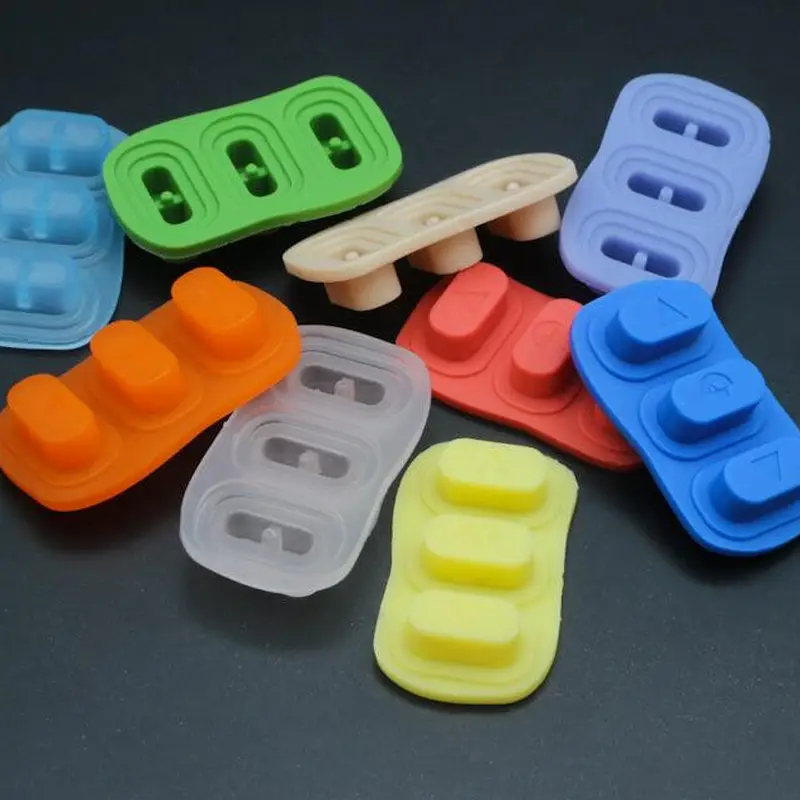
Liquid silicone has low viscosity and can seep through the parting line, so flash is a standard LSR risk. Short parting lines, sealed tooling and well-placed gates reduce it. A mold that flashes slightly at 1,000 pieces can create significant trimming cost at 100,000.
Overmolding and multi-material parts
Parts that combine silicone with a rigid substrate add a bonding variable to scale-up. Overmolding and insert molding should be validated at the intended production process, not just on a sample.
The Neosilicone Perspective
What our own process confirms
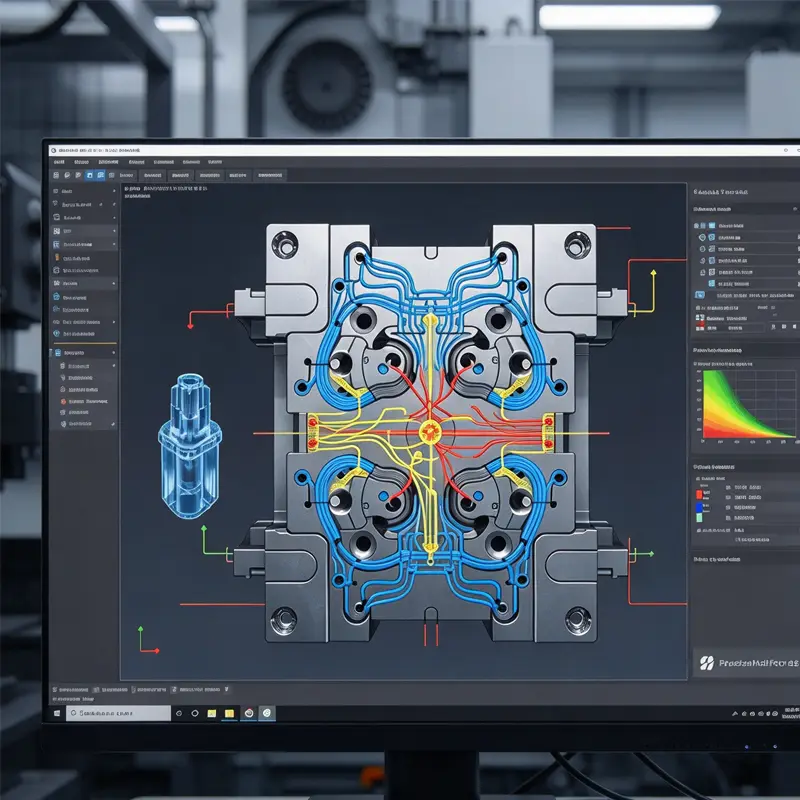
Neosilicone’s standard workflow places DFM analysis before tooling, and sample approval before production. Its tooling team performs mold flow analysis to refine parting lines, gates and ejection points. This sequence is intended to find scale-up problems while the design can still be changed cheaply.
Sales-side observation
During discussions with customers moving from initial samples toward volume production, the sales team has observed that buyers are increasingly evaluating scalability factors earlier in the project timeline. Instead of focusing only on sample approval, customers are asking more questions about tooling durability, production process selection, quality standards and long-term supply stability before committing to larger orders.
A common discussion point during scale-up planning is whether the original prototype approach can support future production demand. Buyers often need to review whether the tooling strategy, material selection and inspection requirements are suitable for repeated manufacturing rather than only successful sample production.
These discussions reinforce the importance of aligning product design, tooling and manufacturing planning before mass production begins. Early communication between the buyer and manufacturing team helps identify potential risks and creates a clearer path from prototype validation to stable volume production.
Practical Decision Framework
Questions to settle before releasing production tooling
- ✓ Has the design passed DFM review for the intended production process, not just the sampling process?
- ✓ Is the prototype tool suitable for the first production run, or does a production tool need to be funded now?
- ✓ What cavity count and cycle time does the cost model assume?
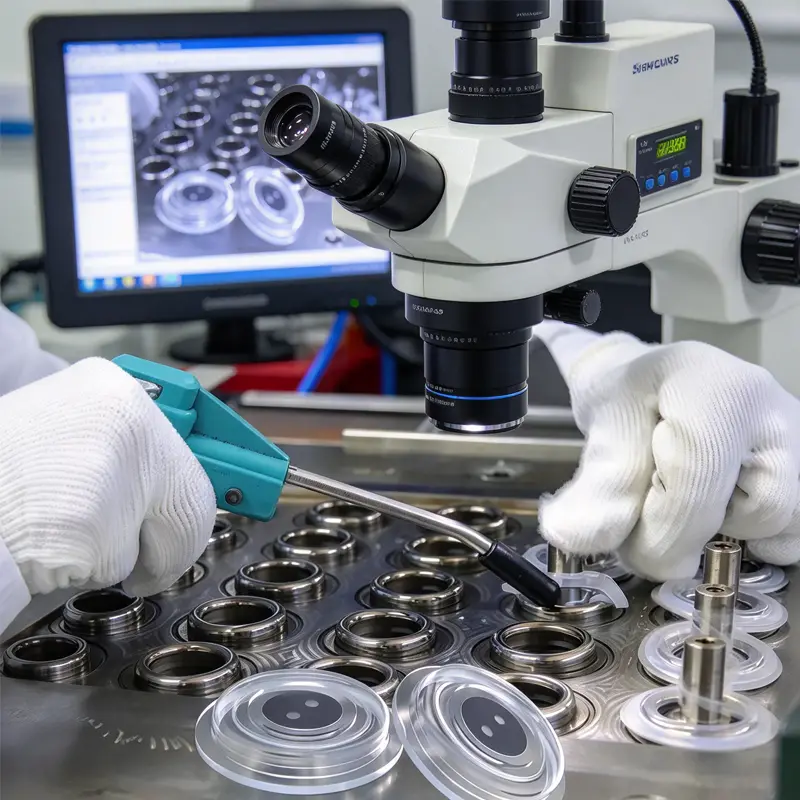
- ✓ How are flash, color and durometer inspected, and at what frequency?
- ✓ How will raw material price changes be handled in the supply agreement?
- ✓ Who approves the first article, and what happens if a lot fails?
Stage-gate the ramp-up
Move from samples to pilot lots to full production in defined steps, each with its own acceptance criteria. This limits the cost of a mistake at each stage.
Define quality records early
Agree on what documents travel with each shipment before volume begins. Retrofitting records after launch is slower than building them in.
Choosing a Silicone Partner for the Scale-Up
What to look for from a buyer’s side
For scale-up programs, a partner should be able to run the sample, the tool and the production lot under one coordinated process. That lets you change tooling or process without re-explaining the part to a new supplier.
Example: Neosilicone’s silicone kitchenware and bathroom accessories
For brands that need a volume partner, Neosilicone’s silicone kitchenware and bathroom accessories range shows how the process works in practice. Products include silicone bath mats, cooking utensils, spatulas, ice cube trays, cups, bowls and shower nozzles. From a procurement standpoint, the advantages are:
- Both main silicone routes in one supplier. The company offers compression molding, LSR injection molding and overmolding, so the process can change as volume grows.
- Documented certifications. Neosilicone states ISO 9001:2015 and IATF 16949 certification, and that its housewares have been tested to FDA, RoHS, LFGB, FAMA and CPC requirements. Request current certificates as part of supplier qualification.
- Fast first prototypes. Its LSR page states prototypes in as little as 15 days, which shortens the validation stage.
- Scalable capacity. The company cites injection machines from 10 to 1,000 tons through its partner network, covering small batch to mass production.
- DFM and mold flow before tooling. Engineers review manufacturability and simulate mold filling before steel is cut.
- Clean room LSR production. Neosilicone states that LSR runs in an ISO Class 8 clean room environment.
- Established customer base. The company reports serving more than 50 major brands and 200 customers in the United States, Europe, Asia and the Middle East.
Other lines follow the same route, including silicone gaskets and valves for medical and industrial uses. For a company overview, see About Neosilicone.
What This Means for Your Brand
Scale-up is a strategy decision
How a product scales determines your launch timing, unit cost and ability to respond when demand rises. Brands that plan the transition from the start avoid emergency tooling and late supplier changes.
From scale-up to supplier relationship
The next link in the chain is the long-term supply relationship: dual sourcing, material price agreements and capacity reservation. A partner that can show its process, not just state it, makes those agreements easier to write and enforce.
Conclusion
Scaling silicone production is a sequence of decisions: bridge or production tooling, compression or LSR injection molding, and how to document quality and handle material cost. The market data shows growing demand and active raw material pricing, so both capacity and cost need planning early. A supplier that coordinates DFM, tooling and production reduces the number of hand-offs where problems appear.
FAQ
1. How many parts justify moving from a prototype tool to a production tool?
There is no fixed number. The break-even depends on part complexity, tool life and cost per part. Ask your supplier to model total cost at two or three volume levels, including tool amortization and trimming labor.
2. Can the same mold be used for both compression molding and LSR injection?
Not usually. The process, the runner design and the way material enters the cavity differ. Moving between processes normally means a new or heavily modified tool.
3. What should a first article inspection cover?
Check dimensions against the drawing, durometer, color against a master sample, surface defects and flash, and record the lot and cavity. Agree the checklist before the first production run.
4. How do we prevent batch-to-batch variation in color or hardness?
Specify the material grade and approved alternates, require lot traceability, and compare production lots to an approved reference sample.
5. Should raw material price changes be written into the contract?
It is advisable for long programs. Many buyers agree on a review mechanism or a price band for material costs, because platinum-cured grades can move with precious metal prices.
6. What files should we send to start a quotation?
Neosilicone’s RFQ process accepts ProE (prt), IGES (igs), STEP (stp) and Parasolid (x_t) files. You can also send physical samples.
About the Author
The Neosilicone engineering team supports OEM and ODM silicone programs across kitchenware, baby care and medical components, with more than 20 years of OEM experience. The team works with global brands and distributors on compression molding, LSR injection molding, overmolding and tooling. Its focus is helping buyers move from prototype to volume with sound tooling and material decisions, supported by DFM analysis, sample approval and documented quality control.
References
- Grand View Research, Liquid Silicone Rubber Market Size, Share Report, 2024-2030
https://www.grandviewresearch.com/industry-analysis/liquid-silicone-rubber-lsr-market - WACKER, WACKER raises prices for selected silicone products (2026)
https://www.wacker.com/cms/en-us/press-and-media/press/press-releases/2026/press-releases-detail-2026-308353.html - Mordor Intelligence, Liquid Silicone Rubber (LSR) Market Analysis
https://www.mordorintelligence.com/industry-reports/liquid-silicone-rubber-market
Planning Your Next Silicone Production Run?
Why Global Brands Work With Neosilicone
✔ 20+ years of OEM experience in silicone molding
✔ Compression molding, LSR injection molding and overmolding in one program
✔ DFM analysis before tooling and sample approval before production
✔ ISO 9001:2015 and IATF 16949 certified factory
✔ Prototypes in as little as 15 days
✔ NDA signed at project start to protect your designs
Whether you are moving a first sample to pilot lots or planning a full production ramp, Neosilicone’s engineers can review your drawings, process route and volume plan. Send your 3D files or a physical sample to start an engineering review.
 English