
Industry Background:
Raw material costs moved sharply in 2026
Silicone buyers faced an unusually active cost year in 2026. Procurement Resource reports that silicone rubber prices rose in the first quarter of 2026 on cost pressure and controlled supply. It also notes WACKER’s price increase of up to 25%, effective February 1, which reflected sharply higher platinum costs for addition-curing products. Platinum is the catalyst used in these silicones.
A second increase followed in April
WACKER announced on March 20, 2026 that it would raise prices across its silicone product range effective April 1, 2026. It cited higher energy, raw material and logistics costs caused by disruption linked to the Middle East. Two increases from one major producer within roughly two months shows how quickly input costs can move.
Cost reduction now has to start earlier in the project
When material cost is volatile, buyers cannot rely on negotiating the resin price alone. The larger savings sit in design, tooling, process choice and yield, and these are decided before production starts.
Why It Matters: Cost Cutting Can Create Hidden Cost
The cheapest quote is not the lowest total cost
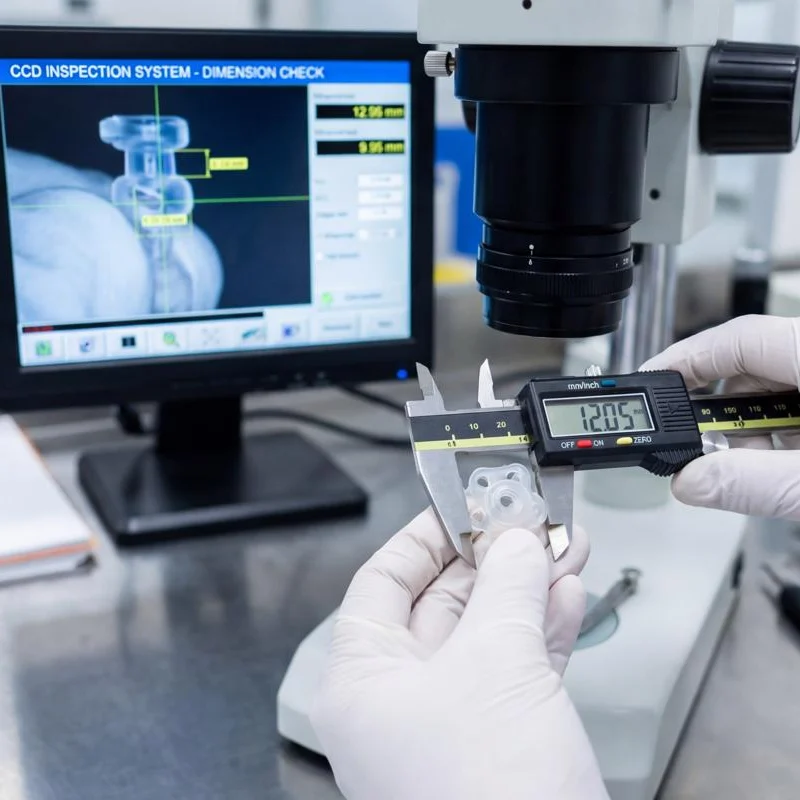
A lower piece price can be offset by scrap, rework, late shipments or returns. For silicone parts that touch food, skin or medical applications, a quality failure can also mean lost certification, a recall or damage to brand reputation.
Quality failures cost more at volume
A defect found at 1,000 pieces is a nuisance. The same defect found after a 100,000-piece shipment is a cost event. Savings that weaken inspection or material control move risk from the supplier to the buyer.
Procurement owns the specification
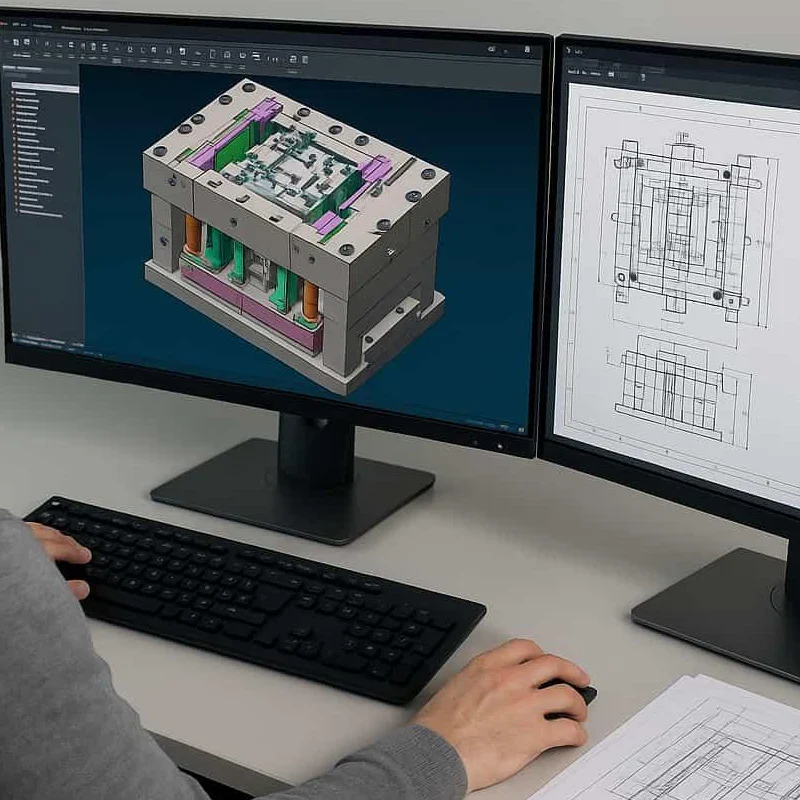
Many cost drivers are written into the drawing and the purchase specification: tolerance, material grade, finish, packaging and inspection requirements. Procurement and engineering need to review them together.
Market Observation: What the Data Shows
Mordor Intelligence reports that liquid injection molding accounted for 69.19% of the liquid silicone rubber market in 2024. By application, seals, gaskets and O-rings held 45.18%. Buyers moving to volume are working in a mature process route with well-understood tooling and automation options.
Compliance-driven segments reward traceability
Mordor Intelligence also notes that leading suppliers are scaling ISO 13485-certified production cells to meet traceability requirements in medical applications. For buyers, the implication is that documented process control is a market expectation in regulated segments.
Material cost is only one input
Both Procurement Resource and WACKER tie 2026 price movement to feedstock, energy, catalyst and logistics costs. Those costs sit outside any single molder’s control. Buyers can only offset them by reducing waste, cycle time and failure cost inside the part.
Where Silicone Production Cost Actually Sits
Material and runner waste
Material is a major cost line, and any silicone that cures in the runner is lost. Cold runner tooling reduces that loss by keeping the runner uncured between shots. Neosilicone’s tooling and mold design page lists cold runner systems among its LSR mold options for this reason.
Cycle time and labor
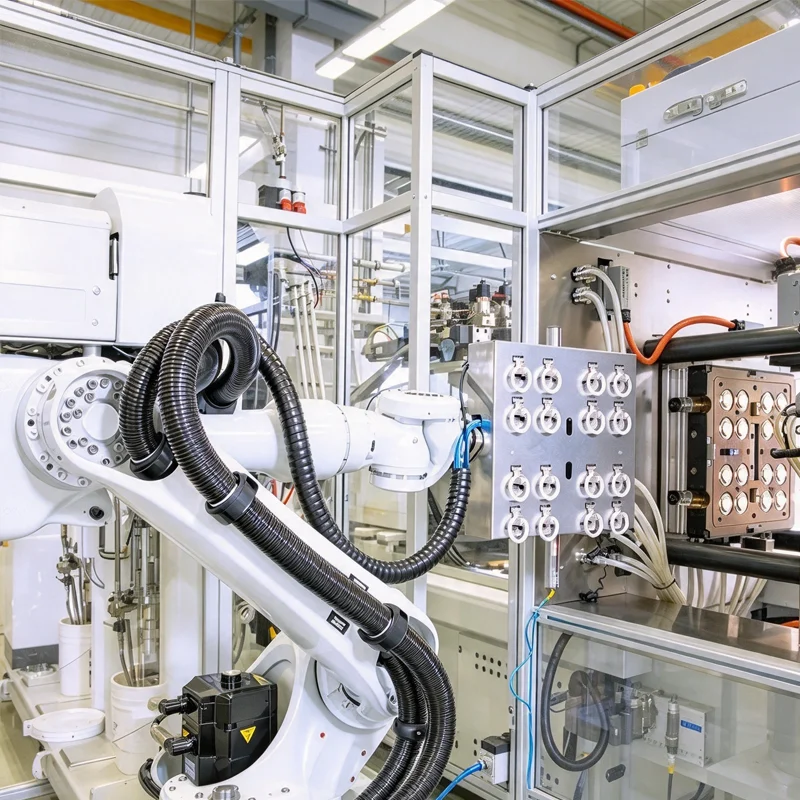
Cycle time is set by cure time, part thickness, cavity count and demolding. Automated demolding and inspection reduce labor per part. Cavity count matters because the same press produces more parts per cycle.
Tooling investment
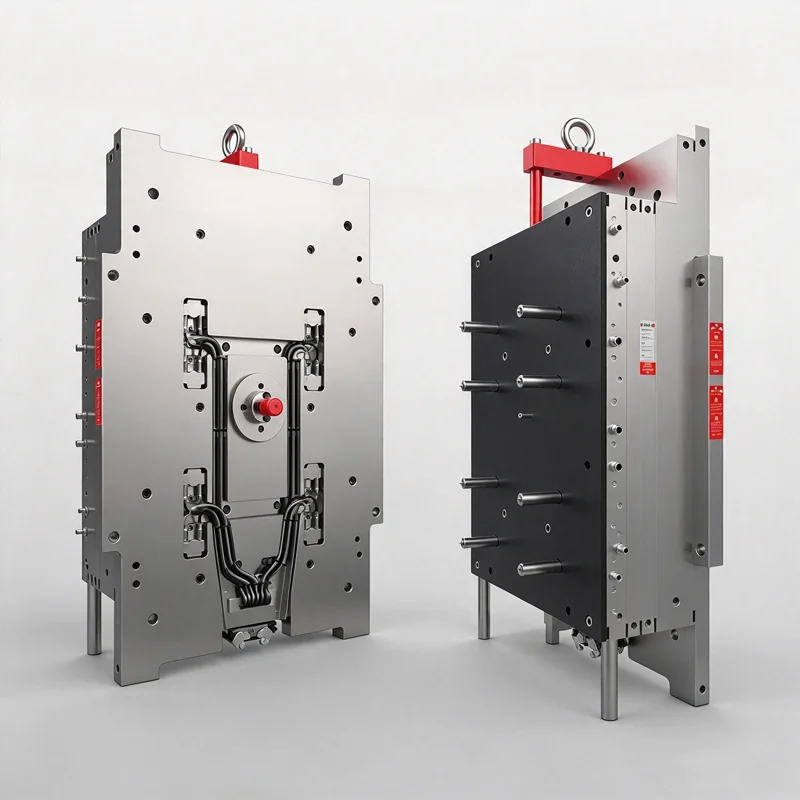
Tooling is a fixed cost spread over the program volume. A tool built for the wrong volume is expensive either way: too light and it wears out, too heavy and its cost cannot be recovered.
Secondary operations and packaging
Trimming, inspection, post-processing, assembly and packaging add cost per part. Features that cause flash or sticking show up here as extra labor.
Failure cost
Rejected lots, rework, expedited freight and customer returns are real costs. They rarely appear on the original quote but they decide the total cost of ownership.
Cost Levers That Protect Quality
Design for manufacturability early
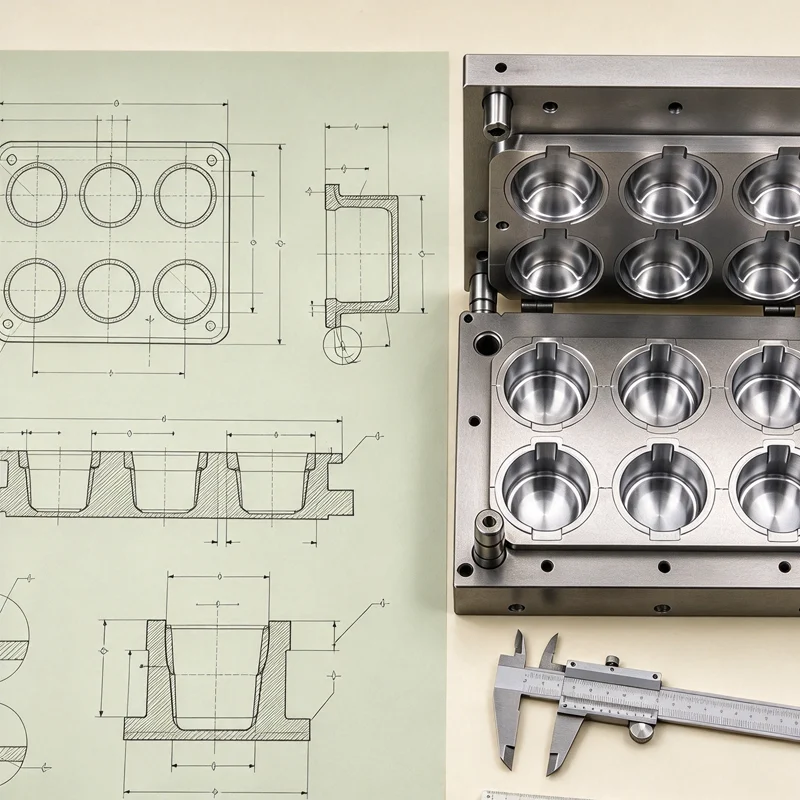
Short parting lines, sensible draft, gates in non-visible areas and consistent geometry reduce flash and cycle time. Neosilicone’s LSR injection molding page recommends keeping parting lines short and placing gates on the underside or in non-visible areas. A DFM review before tooling catches these issues cheaply.
Choose the process that fits the volume
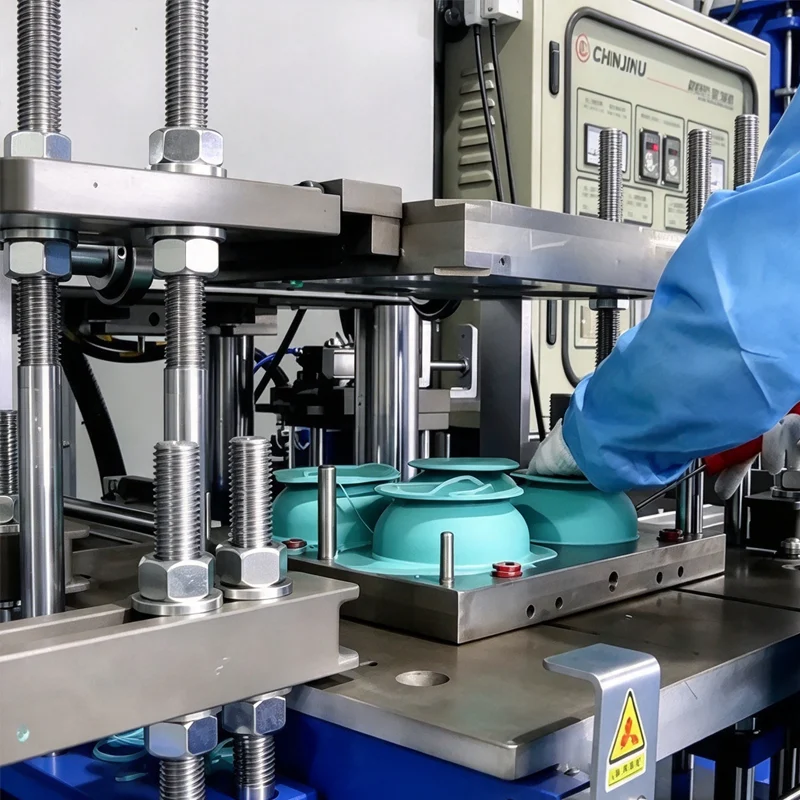
Silicone compression molding is a simpler, cost-effective route and can integrate silicone with plastic, metal or fabric. LSR injection suits high-volume production where automation lowers cost per part. Choosing the wrong route for your volume is one of the most common avoidable costs.
Match tooling to the production stage
Neosilicone’s guidance notes that low-volume runs may be better served by a prototype tool until volumes justify a larger investment. For programs heading directly into high volume, durable production tooling is typically the more cost-effective choice over the long run. Both approaches can be right for different stages.
Use cavity count and automation where volume justifies them
Higher cavity counts and automated demolding reduce cost per part when volume is high enough to recover the tooling. Run the numbers at two or three volume levels before choosing.
Combine processes to cut assembly cost
Where a part joins silicone to a rigid component, overmolding or insert molding can replace a separate assembly step. This removes handling and bonding operations and can improve part consistency. Validate the bond at production conditions.
Consolidate suppliers where it makes sense
Splitting one product across tooling, silicone molding, plastic parts and packaging suppliers adds coordination cost and creates more hand-offs. A partner that offers plastic injection molding alongside silicone processes can reduce the number of vendors to manage.
Cost Cuts That Backfire
Downgrading material grade without testing
Switching from a food-contact or medical grade to a general grade may reduce the material price, but it can invalidate certifications. Any grade change needs a documented compliance review.
Reducing inspection frequency
Fewer checks lower inspection cost but let defects reach the shipment. Cut inspection only where process capability data supports it.
Over-tightening or over-loosening tolerances
Tolerances tighter than the function needs raise tooling and inspection cost. Tolerances too loose lead to assembly problems downstream. Specify tolerance by function.
Skipping prototype validation
Going directly to production tooling saves time but increases the chance of a tool change after steel is cut. A short validation stage is usually cheaper than a mold modification.
Chasing the lowest quote
A quote that is far below others usually omits something: tooling life, inspection, certification support or realistic cycle time. Ask what each quote includes.
The Neosilicone Perspective
What our own workflow confirms
Neosilicone’s standard project flow starts with an NDA and a request for quotation, followed by DFM analysis, sample approval and then production. Its tooling team performs mold flow analysis and finite element analysis to refine parting lines, gates and ejection points before tooling is made. The aim is to find cost and quality problems while the design can still be changed cheaply.
Sales-side observation
From discussions with OEM buyers evaluating silicone cost reduction projects, the sales team has observed that most successful cost improvements come from early collaboration between product design, tooling and manufacturing teams rather than from reducing material specifications alone.
A recurring pattern in project discussions is that buyers often begin with a target piece price, but the final cost is influenced by multiple factors including part geometry, tooling structure, production process selection, cavity planning and inspection requirements. When these factors are reviewed before tooling development, potential cost risks can often be identified earlier and addressed before they become production issues.
The sales team has also observed that buyers increasingly ask for a clearer explanation of the trade-offs behind each quotation, including tooling life, process capability, quality controls and long-term production stability. This reflects a shift from selecting the lowest initial quote toward evaluating the total cost of ownership over the full product lifecycle.
Practical Decision Framework
Questions to ask before you approve a cost-down
- ✓ Does the saving come from design, tooling, process or yield, or only from a lower quoted price?
- ✓ Has the material grade and its certification been confirmed for the final application?
- ✓ What does the supplier’s quote include for tooling life, inspection and sample approval?
- ✓ Has the process route been compared at your realistic annual volume?
- ✓ How will raw material price changes be handled in the contract?
- ✓ What is the cost of failure if a lot is rejected, and who bears it?
Compare quotes on total cost
Build a simple model with tooling amortization, material, cycle time, labor, secondary operations, packaging and freight. Compare suppliers on that basis rather than on piece price alone.
Agree a raw material mechanism
For long programs, agree how silicone price changes will be shared, for example through a review date or a price band. This protects both sides from surprise increases.
Choosing a Silicone Partner That Protects Both Cost and Quality
What to look for from a buyer’s side
Look for a supplier that can show how it controls cost without removing process steps: DFM before tooling, sample approval before production, certified quality systems and a range of molding processes to match your volume.
Example: Neosilicone’s silicone kitchenware and bathroom accessories
Neosilicone’s silicone kitchenware and bathroom accessories range shows this approach in practice. It covers silicone bath mats, cooking utensils, spatulas, cake molds, ice cube trays, cups, bowls, food bags and shower nozzles. From a procurement standpoint, the advantages are:
- Multiple processes, one supplier. Compression molding, LSR injection molding and overmolding are available, so the process can follow your volume instead of forcing a single route.
- Engineering review before tooling. DFM analysis and mold flow analysis aim to remove cost and defect risk before steel is cut.
- Documented quality systems. Neosilicone states ISO 9001:2015 and IATF 16949 certification, and that its housewares have been tested to FDA, RoHS, LFGB, FAMA and CPC requirements. Request current certificates when qualifying the supplier.
- Fast prototypes. Its LSR page states prototypes in as little as 15 days, which shortens validation and reduces the cost of late design changes.
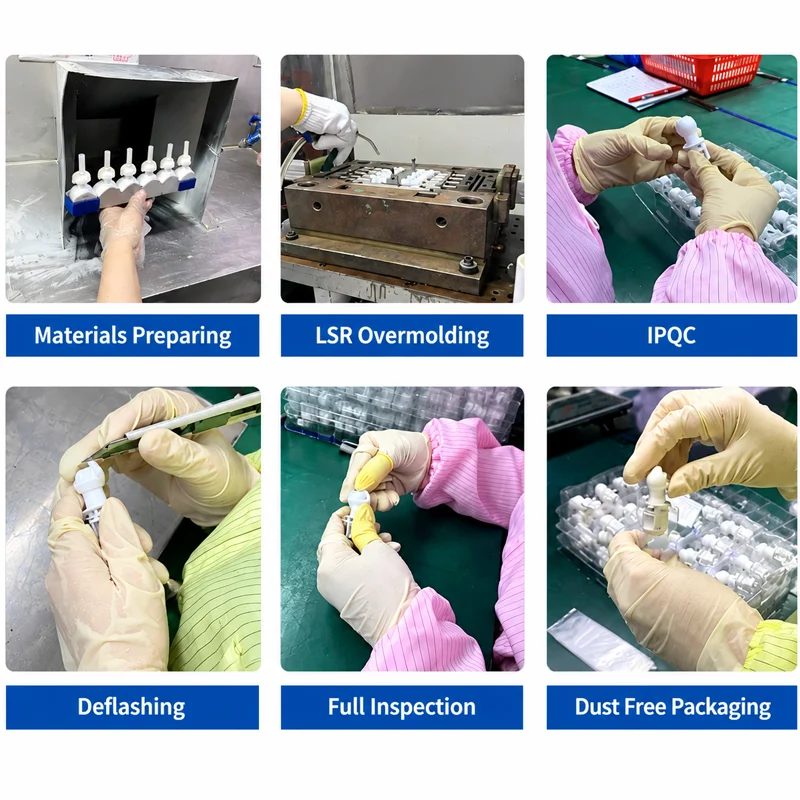
- Clean room LSR production. The company states that its LSR production runs in an ISO Class 8 clean room environment.
- Capacity that scales. Neosilicone cites injection machines from 10 to 1,000 tons through its partner network, covering small batches through mass production.
- Established customer base. The company reports serving more than 50 major brands and over 200 customers across the United States, Europe, Asia and the Middle East.
For medical and industrial buyers, the same processes support silicone gaskets and valves. For a company overview, see About Neosilicone.
What This Means for Your Brand
Cost control is a product strategy
Where you take cost out shapes your margin, your launch timing and your warranty exposure. Brands that engineer cost into the design avoid the pressure to cut quality later.
From cost-down to supplier relationship
The next link is the long-term supply relationship: shared cost targets, material price agreements and yearly reviews. Suppliers that can document their process make those agreements easier to write and to audit.
Conclusion
Reducing silicone production cost without reducing quality is mostly an engineering and sourcing exercise. The 2026 price movements in raw materials show that the material line is hard to control, so the lasting savings sit in design, tooling, process choice, yield and failure prevention. Cost cuts that weaken material control or inspection tend to return as larger costs later. Compare suppliers on total cost, confirm grades and certificates, and choose a partner that can show its process.
FAQ
1. Which design changes cut silicone part cost the most?
Simplifying geometry is usually the biggest lever. Shorter parting lines, fewer undercuts that need special inserts and consistent wall thickness reduce flash, tooling complexity and cycle time.
2. Is a higher cavity count always cheaper per part?
No. More cavities cost more to build and require a larger machine. They pay off only when annual volume is high enough to recover the extra tooling cost.
3. How should we handle silicone price increases during a contract?
Agree a review mechanism in advance, such as a quarterly review or a price band tied to a published index. This avoids renegotiation under pressure.
4. What quality records should we ask for to avoid hidden cost?
Ask for first article inspection reports, material lot traceability, certificates for the grade used and the inspection plan for production lots. These help prove compliance and speed up any dispute.
5. Can we reduce cost by moving from compression molding to LSR injection?
It can reduce labor and cycle time at higher volumes, but it requires a different tool. Evaluate tooling cost against the volume you expect, not the volume you hope for.
6. What files do we send to get an accurate quote?
Neosilicone’s RFQ process accepts ProE (prt), IGES (igs), STEP (stp) and Parasolid (x_t) files. You can also send a physical sample. Include annual volume, material requirements and certification needs.
About the Author
The Neosilicone engineering team supports OEM and ODM silicone programs across kitchenware, baby care and medical components, with more than 20 years of OEM experience. The team works with global brands and distributors on compression molding, LSR injection molding, overmolding and tooling. Its focus is helping buyers lower total production cost through design review, process selection and documented quality control, supported by DFM analysis and sample approval before production.
References
- Procurement Resource, Silicone Rubber Price Trend Analysis 2026
https://www.procurementresource.com/resource-center/silicone-rubber-price-trends - WACKER, WACKER to raise prices for silicone-based products (March 20, 2026)
https://www.wacker.com/cms/en-us/press-and-media/press/press-releases/2026/press-releases-detail-2026-310722.html - Mordor Intelligence, Liquid Silicone Rubber (LSR) Market Analysis
https://www.mordorintelligence.com/industry-reports/liquid-silicone-rubber-market
Start a Cost and Quality Review for Your Silicone Project
Request Engineering Review
Upload Your 3D Files
Request DFM Analysis
Start Your OEM Project
Request Material and Process Recommendation
Neosilicone’s engineers can review your drawings, volume plan and material requirements, and suggest where design, tooling or process changes could lower total cost without weakening quality.
 English