
At Neosilicone, a precision manufacturer and tooling factory serving global OEMs and suppliers, we design and produce silicone fluid-control components every day. Choosing the right one-way silicone valve—whether a silicone cross slit valve, a duckbill valve, or a custom silicone umbrella valve—is critical to achieving the correct opening pressure, leakage performance, chemical compatibility, and service life for your product. This guide compares geometry, function, materials, performance trade-offs, and manufacturing considerations so engineering and procurement teams can specify the optimal valve for their application.
Silicone Cross Slit Valve
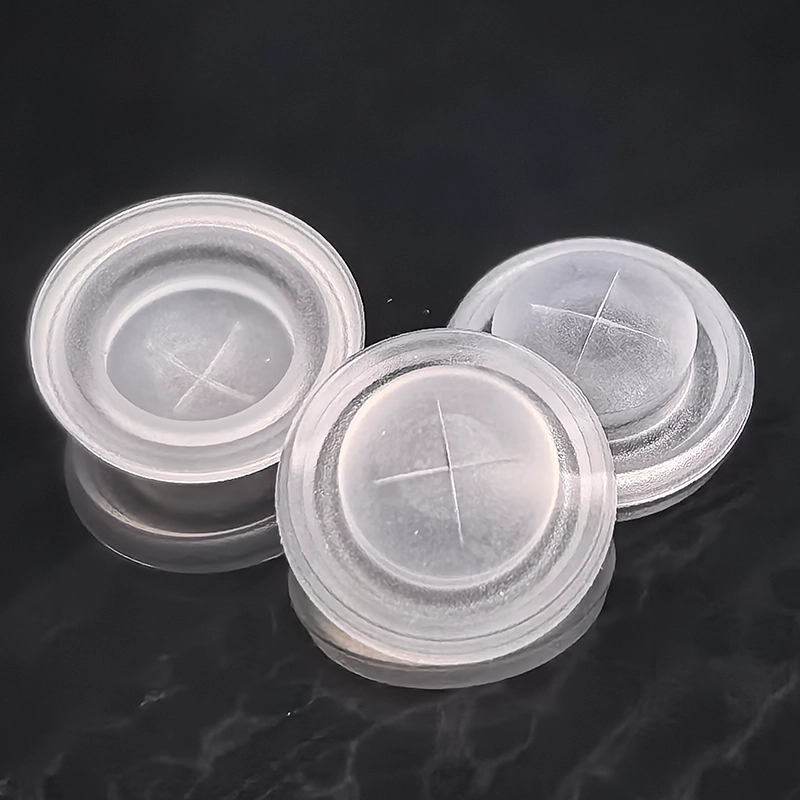
A cross-slit valve is typically molded as a thin, flexible disc or nozzle with two perpendicular slits that form an “X.” Under forward pressure, the slits open to allow flow; when pressure drops or reverses, the slit lips press back together to reseal.
Key characteristics
- Very low cracking/opening pressure when designed with thin slit land.
- Excellent repeatability and self-centering reseal behavior.
- Compact profile — ideal for injection ports, squeeze bottles, and small dosing systems.
- Can be laser-trimmed or mold-formed for tight flow tolerances.
Typical applications
- Dispensing cosmetics, gels, syrups, or adhesives where accurate small-dose delivery is required.
- Medical disposables and diagnostic kits with single-use or controlled-dispense needs.
Silicone Duckbill Valve
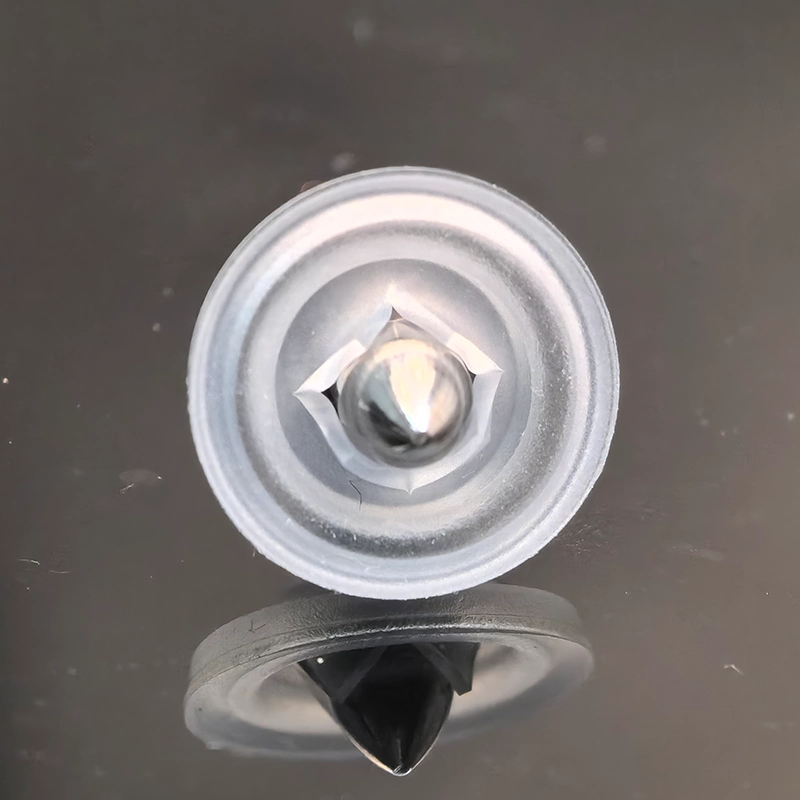
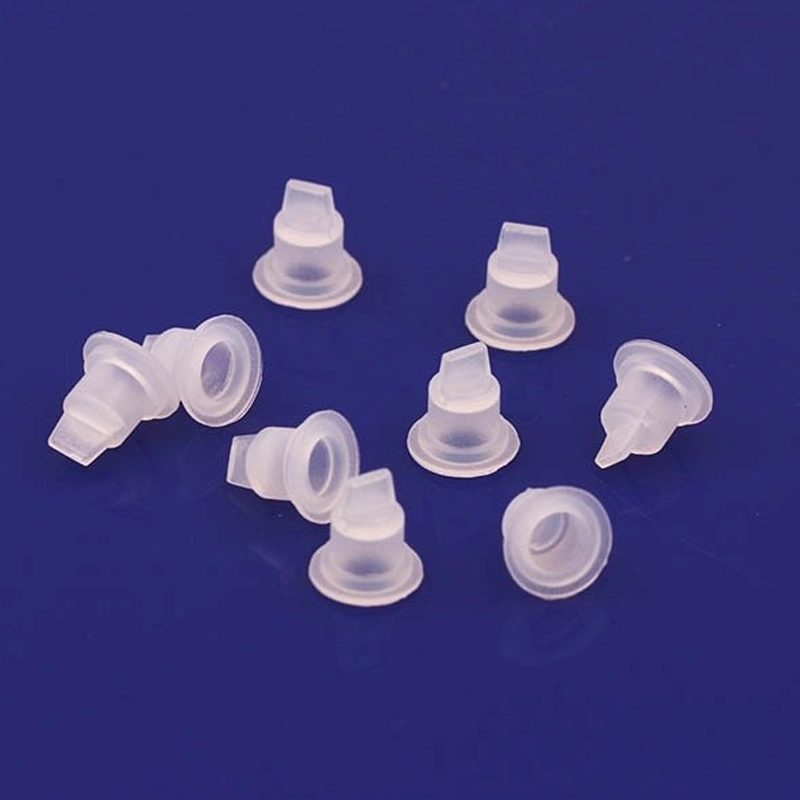
A duckbill valve has a tapered elastic sleeve with a flattened outlet that resembles a duck’s bill. Flow opens the two lips apart longitudinally; when pressure drops, the lips press together to seal.
Key characteristics
- Simple geometry with robust sealing under backflow; good resistance to particulate clogging compared to very fine slits.
- Higher allowable flow rates and wider passage than cross-slit designs of the same footprint.
- Typically higher opening pressure than an optimized cross-slit but delivers strong anti-backflow protection.
- Good for flexible tubing or cartridge integration.
Typical applications
- Medical drainage, urinary devices, respiratory collection bags, beverage systems, and simple one-way check valves in fluidic assemblies.
Silicone Umbrella Valve (Mushroom Valve)
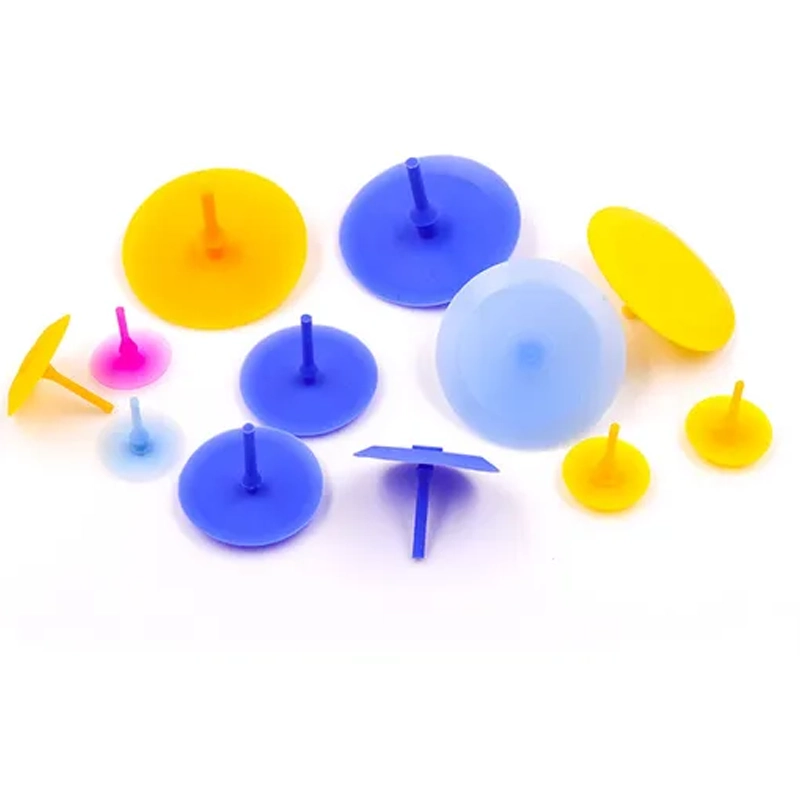
An umbrella valve (mushroom valve) features a cap-and-skirt geometry: a rounded head (cap) with a thin peripheral skirt that lifts under forward pressure and reseats to prevent backflow. The design resembles an umbrella or mushroom.
Key characteristics
- Excellent sealing for low-to-moderate pressures; the skirt provides a large seating area for reliable shutoff.
- Good tolerance to misalignment and particulate contamination because the skirt can flex around debris.
- Lower profile than some duckbills for the same sealing area, and adaptable to integrated housings or molded ports.
- Can be tuned for opening pressure by skirt length, wall thickness, and durometer.
Typical applications
- Liquid sampling containers, venting and pressure-relief fittings, pump inlet check valves, and small dosing dispensers that require durable reseal performance.
What’s the Difference Between Them
Flow and Opening Pressure
- Cross-slit: lowest cracking pressure for micro-dosing; ideal for precise, small-volume metering.
- Duckbill: medium to high opening pressure with higher flow throughput.
- Umbrella: tunable—can be engineered for low or moderate cracking pressures with reliable reseat.
Leakage and Particulate Tolerance
- Cross-slit can be sensitive to particulate trapping inside the slit and may leak if slits become worn or contaminated.
- Duckbill and umbrella geometries tend to be more tolerant of particulates and more forgiving in dirty environments.
Durability and Cycle Life
- Material grade and wall design dominate cycle life. When molded from medical-grade LSR and properly cured, all three types can achieve long lifespans; however, thin cross-slit land areas may have shorter fatigue life under aggressive cycling unless engineered and processed precisely.

Integration and Packaging
- Cross-slit valves are compact and easy to integrate into small molded heads or overmolds.
- Duckbills often suit bonded or press-fit tube assemblies.
- Umbrella valves work well as cartridge-style inserts or overmolded seals in housings.
Materials, Manufacturing & Quality Considerations
- Use platinum-cured LSR or high-quality HCR silicone for low extractables, chemical compatibility, and stable mechanical properties.
- Liquid silicone rubber injection molding (LIM/LVM) offers the tightest dimensional control and minimal flash for cross-slit edges and thin skirts.
- Critical process controls: cure profile, venting, and automated flash removal—these directly affect sealing and cycle life.
- For precision flow specs, validate with opening-pressure vs. flow curves, long-term cycle testing, and chemical-compatibility trials.
- Suppliers should provide lot traceability, Certificates of Analysis, and standardized inspection (vision, leak testing, SPC).

How to Choose
- Define functional priorities: dosing precision, max flow, particulate environment, and cycle life.
- Specify operating pressures, media chemistry, temperature, and sterilization needs.
- Ask for sample flow curves, life-cycle test data, and material CoAs.
- Prefer manufacturers that offer DFM support, automated LIM production, and end-to-end one-stop service.

Conclusion
Cross-slit, duckbill, and umbrella silicone valves each solve distinct fluid-control challenges. A silicone cross slit valve is ideal for ultra-low-dose, compact dispensers. The duckbill valve delivers robust anti-backflow and higher throughput. The umbrella valve balances sealing area and dirt tolerance with flexible integration options. Selecting the right valve geometry and partnering with the right manufacturer and suppliers—preferably a full-service factory like Neosilicone with LIM expertise and OEM capabilities—ensures predictable performance and reliable production scale-up.
Need performance data or prototype samples? Contact Neosilicone today. Tell us your target flow, media, and cycle requirements and we’ll recommend the optimal valve geometry, material grade, and manufacturing route to meet your product goals.
 English