
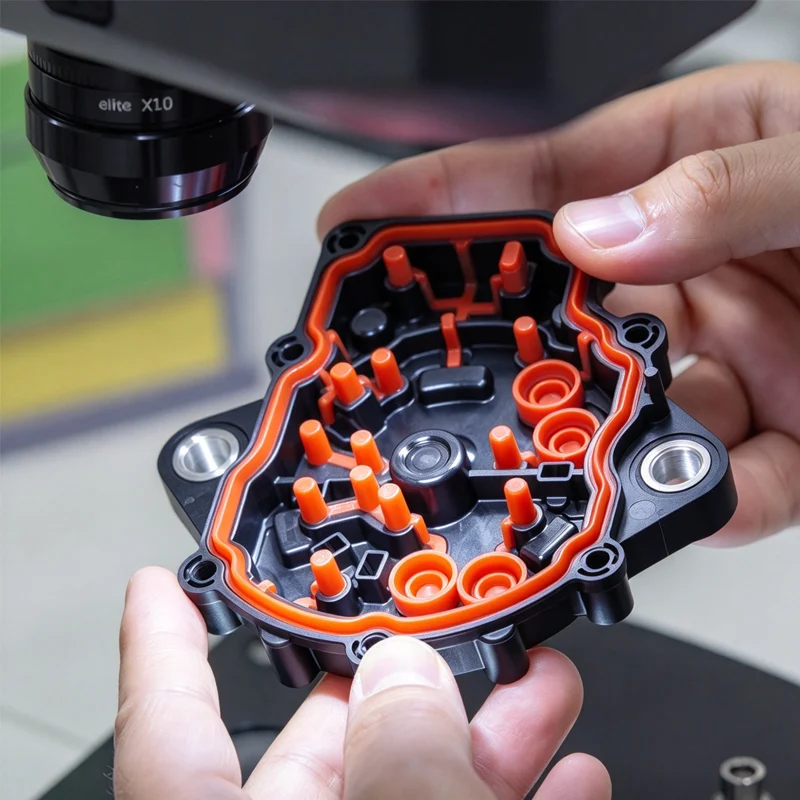
Industry Background: More Silicone Volume, Less Tolerance for Visible Defects
Silicone Elastomers Now Anchor a Large Share of the Silicone Market
Grand View Research valued the global silicone market at USD 24.3 billion in 2025 and estimates USD 25.8 billion for 2026. Elastomers, the family that includes liquid silicone rubber (LSR), were the largest product segment at 42.14% of 2025 revenue. For a buyer, this means silicone parts are moving into more product categories, and each category comes with its own appearance and performance expectations. Source: Grand View Research.
Where LSR and Compression Molding Fit in Buyer Programs
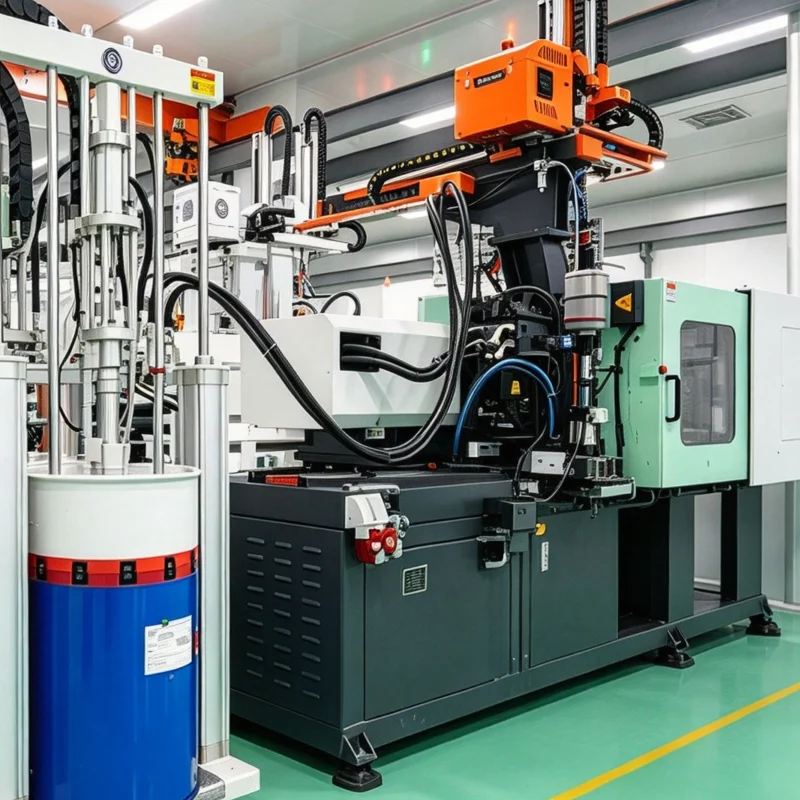
Two processes dominate custom silicone sourcing: LSR injection molding for high-volume, tight-tolerance parts, and compression molding for a wider range of geometries and volumes. The choice affects how air can escape from the cavity, so it should be part of the first supplier conversation. Neosilicone’s capability overview covers LSR injection, compression, overmolding and extrusion, which shows how many process routes a single part family can take.
How Air Bubbles Show Up in Purchased Parts
Bubbles usually appear as one of three defects: surface pits, internal voids visible in translucent parts, or blisters and whitened edges after cure. All three can pass a quick visual check at the start of a run and fail later at the customer. Which one you see is the first clue to where the problem started.
Why It Matters: The Business Impact of Bubbles
Rejection Rates and Disputed Inspection Standards
A bubble that one party calls cosmetic, the other calls a reject. Without an agreed defect limit before tooling is released, every shipment becomes a negotiation over what “acceptable” means.
Functional Risk in Sealing and Fluid-Handling Parts
In gaskets, valves and medical-contact components, an internal void can compromise sealing or create a leak path. This matters most for products such as those in Neosilicone’s liquid silicone gasket and medical silicone parts categories, where the part has to perform as well as look right.
Tooling Revisions Cost More Than Early Design Review
Adding or deepening vents, moving a gate, or reworking a parting line after the mold is built takes tool time and delays launch. Catching the risk during design review costs far less.
Market Observation: What Published Sources Say About Air Entrapment
Air Bubbles Are Tied to Filling and Venting
A February 2025 troubleshooting guide from Hunter Plastics attributes air bubbles and voids in LSR parts mainly to poor cavity filling and trapped air, typically from inadequate mold venting or poorly tuned injection speed. This places much of the root cause on mold design and process setup, not on the material alone. Source: Hunter Plastics.
Surface Defects Also Trace Back to Curing and Moisture
The same guide links surface defects such as bubbles and wrinkles to improper curing conditions, moisture contamination and incorrect process settings. A buyer therefore needs to ask about material handling and process control, not only about the tool.
Mold Suppliers Are Facing More Scrutiny in LSR
An August 2026 PlasticsToday report notes that Dow announced a USD 100 million specialty silicones investment in June 2026, including LSR manufacturing expansion, to meet demand in mobility, electronics and healthcare. The same report frames LSR mold suppliers as under scrutiny from manufacturers who want precision at high volume. More LSR capacity coming online will keep raising the standard buyers apply to their tooling partners. Source: PlasticsToday.
Root Causes Buyers Should Map to a Responsible Party
Mold Venting and Parting Line Design
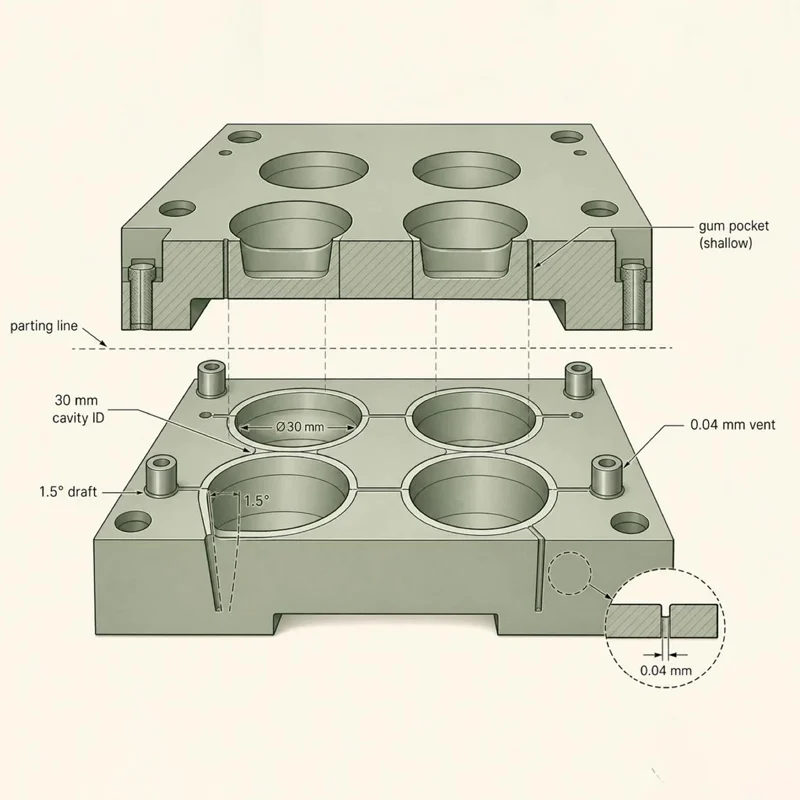
Air must leave the cavity as material enters. Vents too small or badly placed trap air at the last-fill areas. Vents too large invite flash, which is especially difficult with low-viscosity LSR. Getting this balance right is a mold-design responsibility.
Gate Location and Flow Path
A gate that sends two flow fronts toward each other can seal an air pocket between them. Flow-path decisions are made before steel is cut and are hard to reverse afterwards.
Vacuum-Assisted Molding
Evacuating the cavity before injection can reduce reliance on fine vents. It requires a mold built for a vacuum seal, so it needs to be decided during tool design.
Entrained Air in the Material and Metering System
Air can enter through the metering pump, the static mixer, or an unbalanced A:B ratio. It tends to show up as scattered micro-bubbles across the part instead of at a repeatable location. Degassing and equipment checks are the fixes here, not mold changes.
Compression Molding: Preforms, Bumping and Pressure
In compression molding, trapped air depends on preform shape, how the mold is bumped or breathed during closing, and the pressure profile. Tooling and operator practice share responsibility.
Moisture, Volatiles and Cure Conditions
Moisture in the compound, residual volatiles, or a cure that is too fast at the surface can produce blisters and whitened edges even when venting is correct.
Neosilicone and Toolingsun Perspective
What the Toolingsun Team Publishes on Air Traps
Toolingsun states that mold flow analysis lets engineers catch defects such as air traps, weld lines, short shots and sink marks virtually, before they become costly problems. Its post on mold flow analysis in injection mold design explains how simulation informs gate placement and venting.
Observation from Sales and Production Teams
During silicone product development discussions, buyers are increasingly asking about defect prevention earlier in the project timeline rather than only reviewing quality results after mass production. Questions related to air bubbles, internal voids, flash control and appearance acceptance criteria often appear during tooling evaluation, especially for silicone parts where sealing performance or visible appearance is critical.
From the engineering review perspective, many potential production risks can be identified before tooling begins. Discussions around mold venting, gate location, material handling and inspection standards help customers better understand that silicone quality is influenced by the connection between product design, tooling structure and manufacturing control.
For silicone projects with strict appearance or functional requirements, establishing clear defect acceptance criteria before sample approval helps reduce misunderstandings during inspection and supports more stable long-term production.
Practical Decision Framework: Questions to Ask Before You Approve a Tool
Before Tool Release: Design Review Questions
- Has the supplier run flow simulation and can they show where air traps are predicted?
- Where are vents planned, and what vent depth do they intend to use?
- Is the mold designed for vacuum assistance if the geometry needs it?
- How will the parting line be maintained to control flash while keeping vents open?
At First-Article Approval: Sample Review Questions
- Were samples inspected under magnification or cut open to check for internal voids?
- Do you have a written bubble acceptance limit by zone (sealing surface vs. non-functional area)?
- Were bubbles found at the same location on consecutive shots?
For Ongoing Production: Process Control Questions
- How is the compound handled and stored to limit moisture?
- What is the incoming material inspection routine?
- How often are vents cleaned and inspected as the mold wears?
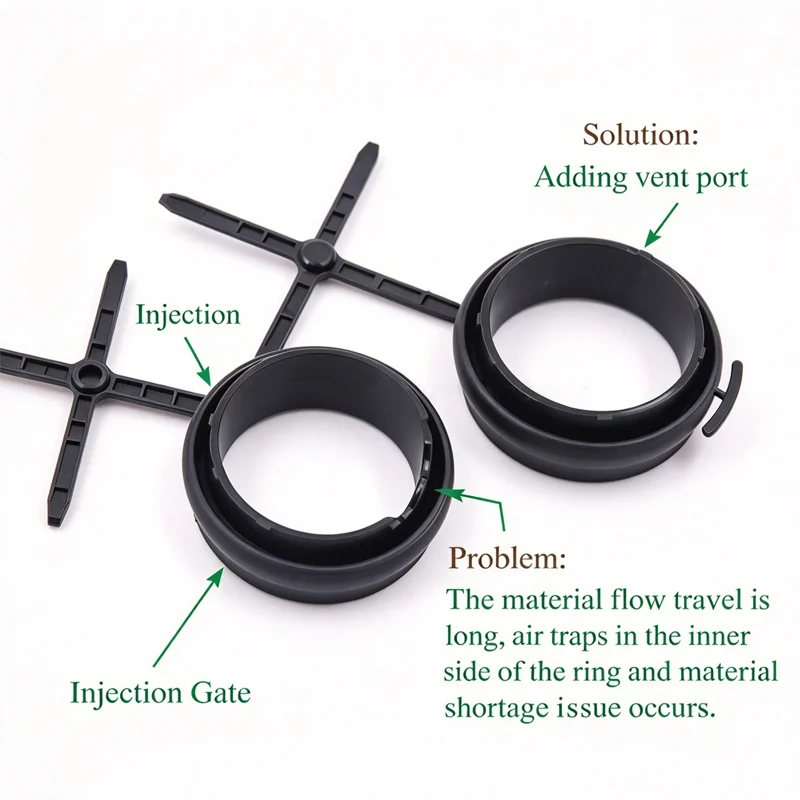
Diagnosing the Defect: Repeatable Location vs. Random Distribution
If bubbles appear at the same spot on every shot, look first at venting, gate location and flow path. If they are scattered randomly through the part, look at material degassing, metering and mixing. Asking for this diagnosis in a supplier’s 8D or corrective-action report shows how well they understand the problem.
Sourcing Silicone Parts with Toolingsun and Neosilicone
Toolingsun: Mold Design and Manufacturing for Silicone and Plastic Parts
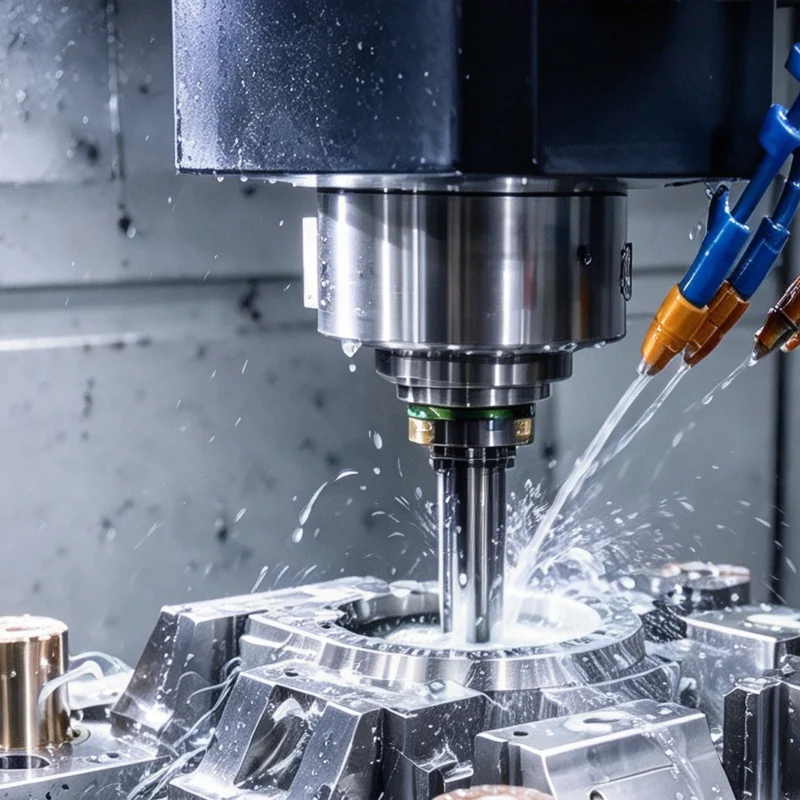
Toolingsun’s production molds page says its tooling experience covers plastic injection molding, LSR injection molding, plastic and LSR over-molding, silicone compression molding, and silicone and plastic extrusion, with ISO 9001 and IATF 16949 quality management. Its in-house tool and die makers use CNC capability to build new molds. For buyers who need a mold designed with venting and flow in mind, its injection molding and mold service offers a consultation for each mold quote and a project manager for each order. Overseas buyers can read about its export tooling service, covering molds built at its own facility in China and shipped to your production site.
Neosilicone: Molding Silicone Parts from the Tools You Approve
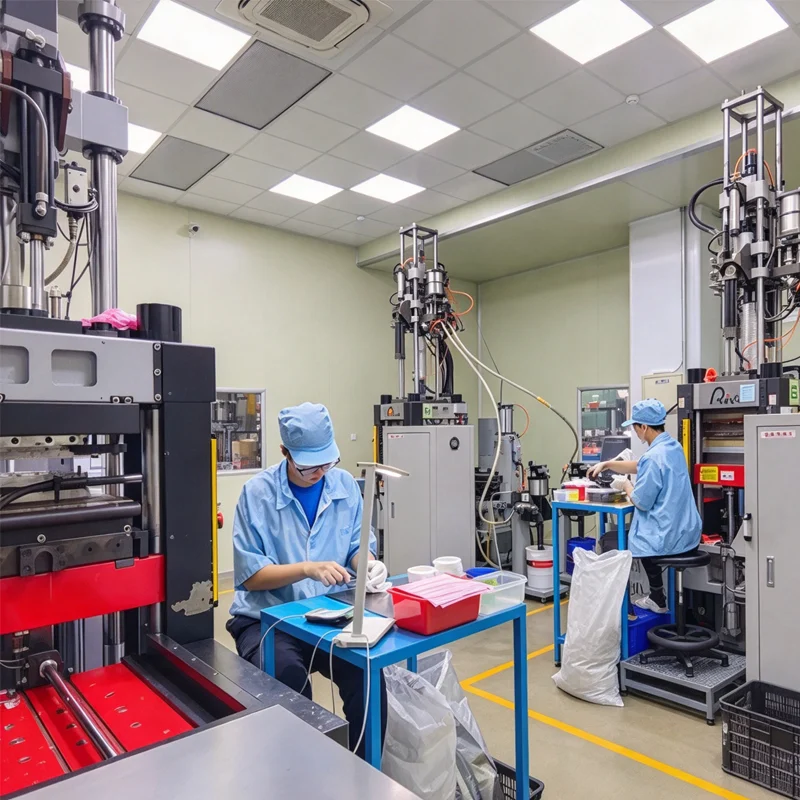
Neosilicone manufactures custom silicone parts through LSR injection molding, compression molding and transfer molding. Its kitchenware and bathroom accessories range is produced in an ISO 9001 and FDA certified facility, and its medical silicone parts range is ISO 9001 and ISO 13485 certified. Its published quality process includes inspection of incoming raw materials, real-time monitoring during production, and batch testing. Its factory page lists the mixing, cleaning and coating equipment on site.
What a Connected Tooling-and-Production Chain Means for Buyers
When the mold builder and the molder are in close contact, a bubble found at first-article stage can be traced to the tool, the material or the process without a hand-off between parties. Buyers who want to compare suppliers on this basis can also read Neosilicone’s guide to evaluating high-quality silicone products.
What This Means for Your Brand
From Defect Control to Supplier Selection
Material, tooling, molding process and quality control are linked. A bubble problem that starts with venting will not be solved by tighter final inspection alone. It is better to select a supplier who can explain where in this chain their defect risks sit.
Product Positioning and Long-Term Competitiveness
Silicone products sold on safety, softness or sealing performance carry a visible-quality promise. Setting bubble acceptance criteria by product zone at the start protects that positioning. It also reduces disputes and gives you a fair basis for comparing quotes.
FAQ
1. Can air bubbles be fully eliminated in silicone products?
Not always, but they can be controlled to a defined acceptance level. Sealing surfaces and food-contact zones usually need a stricter limit than hidden areas, so agree limits by zone before approving the tool.
2. Why do bubbles sometimes appear only after production has been running for a while?
Vents can clog with residue and the parting line can wear over many cycles, both of which reduce air escape. Ask for a vent-cleaning interval and mold maintenance record.
3. Should I ask for a cross-section of a sample part?
Yes, for parts with thick sections or sealing functions. Surface inspection can miss internal voids that a cut sample shows.
4. Is a cheaper mold more likely to cause bubbles?
Not automatically, but a mold built without design review, flow analysis or vacuum provision is more exposed to venting problems. Compare quotes on what design validation is included, not only on price.
5. What information should I send a supplier so they can assess bubble risk?
Send the 3D model, sealing and cosmetic zones, expected volume, material grade and any inspection standard you already use. This lets the supplier plan gates and vents against your real requirements.
About the Author
Jack has more than 20 years of experience in silicone and plastic mold design, manufacturing support, and production problem-solving. He works with global brands and distributors on silicone product development, tooling evaluation, and part-quality improvement. His experience covers key areas including silicone molding processes, mold design considerations, production optimization, and defect prevention. Through close cooperation with engineering and manufacturing teams, Jack supports customers in evaluating tooling risks, improving product reliability, and making informed decisions before mass production.
References
- Grand View Research, Silicone Market Size, Share & Trends Report, 2026–2033
https://www.grandviewresearch.com/industry-analysis/silicone-market - Hunter Plastics, Troubleshooting Liquid Silicone Rubber Injection Molding: A Complete Guide (Feb 2025)
https://hunterplastics.com/troubleshooting-liquid-silicone-rubber-injection-molding-a-comprehensive-guide/ - PlasticsToday, LSR Mold Suppliers Face Scrutiny as US Manufacturers Demand Precision for High-Volume Production (Aug 2026)
https://www.plasticstoday.com/medical/lsr-mold-suppliers-face-scrutiny-as-us-manufacturers-demand-precision-for-high-volume-production
Why Global Brands Bring Their Silicone Projects to Toolingsun and Neosilicone
✔ Mold design and manufacturing in-house, with CNC capability
✔ ISO 9001 and IATF 16949 quality management for tooling
✔ Flow simulation used in mold design to flag air traps early
✔ LSR injection, compression and transfer molding for silicone parts
✔ ISO 9001 and FDA certified production; ISO 13485 for medical silicone parts
✔ Incoming material inspection, in-process monitoring and batch testing
Planning a new silicone product or reviewing a tool that keeps producing bubbles? Share your drawing with our engineers and get feedback on venting, gating and process route before the tool is cut.
 English